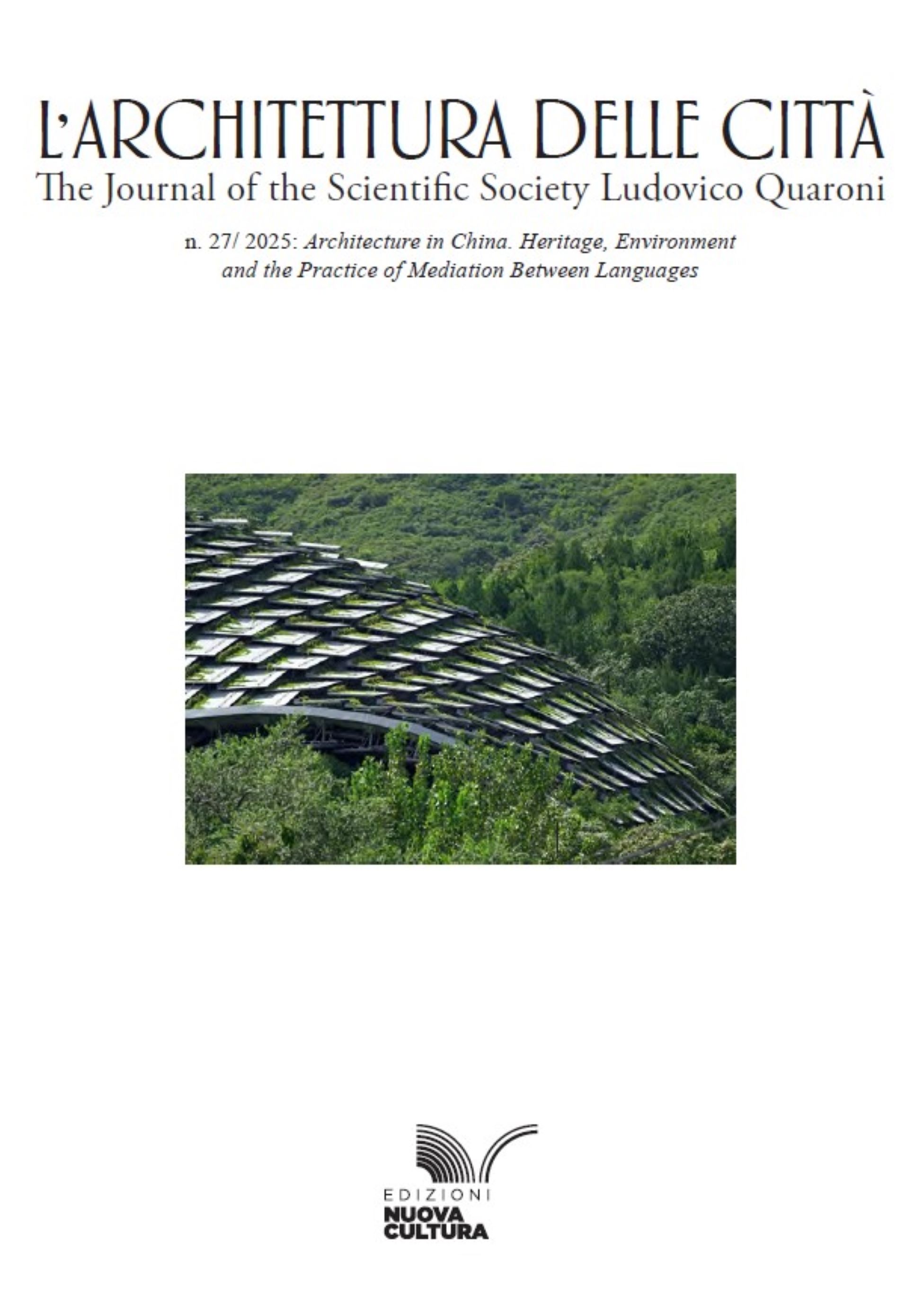
Protective Shelter for the Archaeological Site of Peking Man Cave, Zhoukoudian, Beijing. 2013-2018
Abstract
The protective shelter designed for the Peking Man Cave at Zhoukoudian addresses one of the most radical conditions faced by contemporary architecture: intervention within an active archaeological site of outstanding scientific value, where the architectural design cannot assert autonomy and must instead operate at the threshold between protection and accessibility. Recognised as a UNESCO World Heritage Site, the cave preserves stratified evidence of human evolution spanning hundreds of thousands of years, requiring both strict conservation measures and the possibility of continued research and public interpretation. The project responds to this challenge through a semi-enclosed, reversible architectural system conceived according to principles of minimal intervention and passive environmental control. By suspending a large-span protective structure above the cave without touching the archaeological ground, the design stabilises climatic conditions while preserving the site’s physical and perceptual integrity. At the same time, the shelter functions as a spatial device that organises access, circulation and interpretation, enabling visitors to experience the site without compromising its authenticity.
Rather than dissolving the tension between permanence and use, the project deliberately operates within it. Architecture here is neither an object nor a representation, but an infrastructural framework that simultaneously guarantees the long-term preservation of a fragile heritage and its transmission as scientific knowledge. The Zhoukoudian intervention thus exemplifies a theoretical position in which architecture is understood as a mediating practice, negotiating between temporal depth, environmental responsibility and cognitive accessibility.
References
ICOMOS, International Charter for the Conservation and Restoration of Monuments and Sites (Venice Charter), 1964.
ICOMOS, Charter for the Protection and Management of the Archaeological Heritage, 1990.
Jonathan Hill, Weathering Architecture, Routledge, London, 2012.
ICOMOS, Xi’an Declaration on the Conservation of the Setting of Heritage Structures, Sites and Areas, 2005.