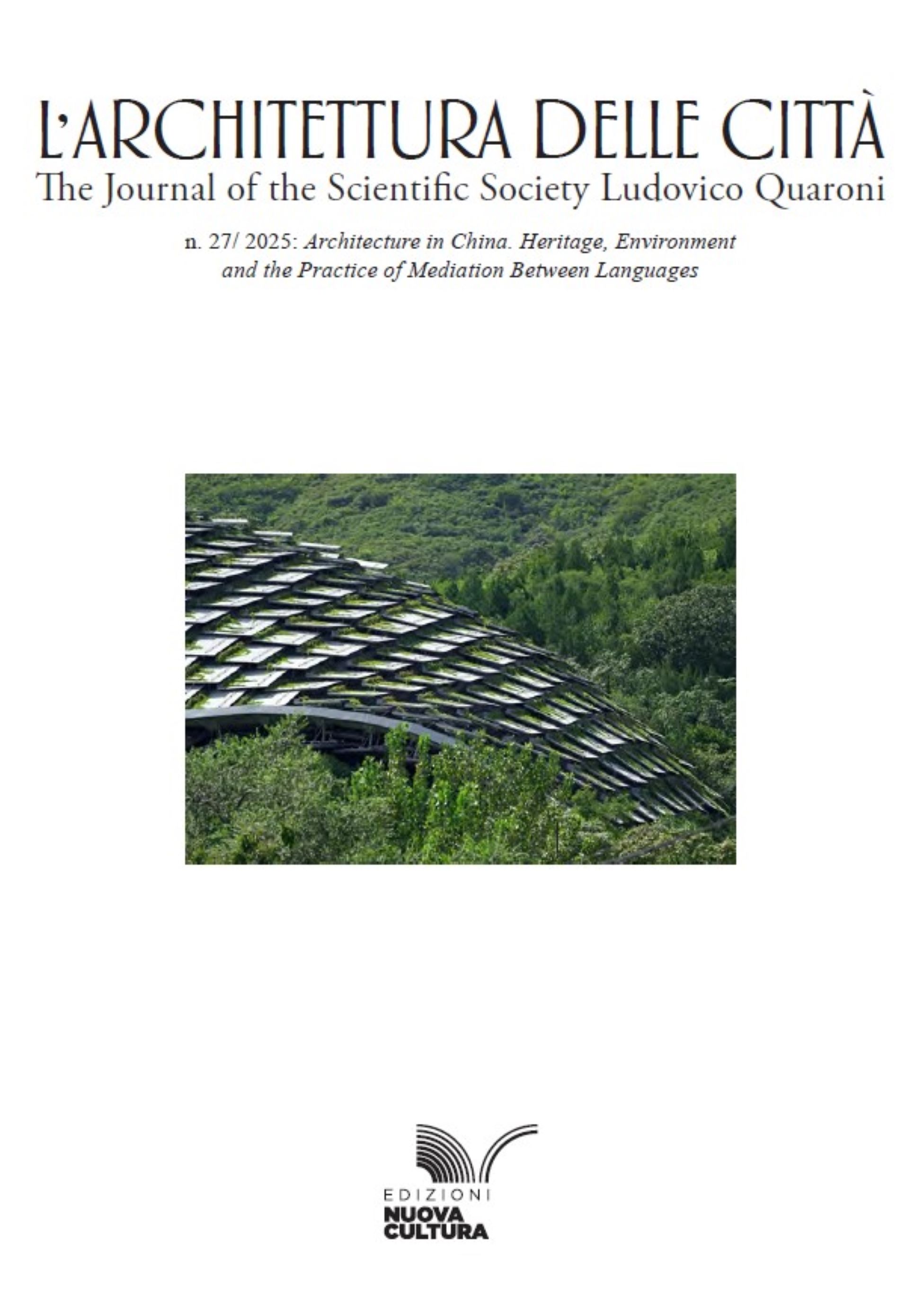
Rizhao Science and Technology Museum Rizhao, Shandong Province. 2014-2020
Abstract
The Rizhao Science and Technology Museum is conceived as a civic institution dedicated to the public transmission of scientific knowledge, operating at the intersection of research, education and urban life. Originating from an initiative linked to the scientific legacy of Nobel laureate Samuel Chao Chung Ting, the project moves beyond a commemorative model to define a cultural infrastructure aimed at engaging a non-specialised audience with contemporary science.
Embedded within a coastal park between the city and the Yellow Sea, the museum is largely developed underground to preserve landscape continuity while organising a complex spatial sequence beneath it. A continuous spiral path guides visitors through a progression of exhibition spaces that translate abstract scientific concepts into an embodied experience. Circulation, structure and geometry operate as a single cognitive device, framing architecture not as a neutral container but as an active mediator between scientific content and public understanding. The project exemplifies an architectural approach in which institutional permanence and experiential engagement coexist, positioning architecture as an infrastructure of knowledge within the contemporary city.
References
Stan Allen, Practice: Architecture, Technique and Representation, Routledge, 2000, pp. 1-15; 47-62.
Antoine Picon, Digital Culture in Architecture, Birkhäuser, 2010, pp. 22-35.