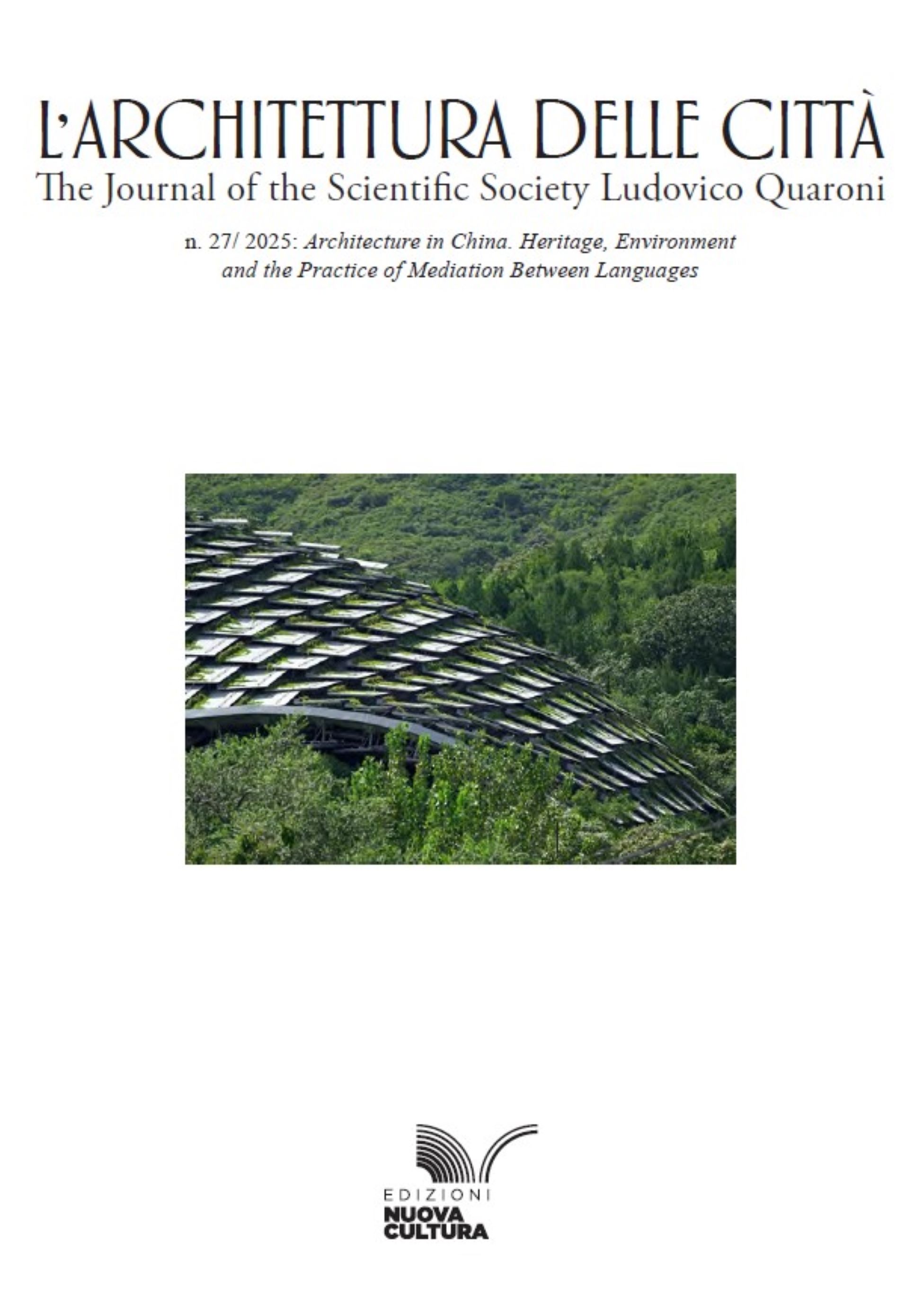
New School of Urban Design, Wuhan University Campus Wuhan, Hubei Province, 2016–2020
Abstract
The New School of Urban Design at Wuhan University addresses the architectural challenge of designing an educational building within a historically and environmentally stratified campus while asserting its role as a contemporary institution dedicated to architectural and urban education. Rather than pursuing iconic visibility, the project establishes a calibrated dialogue with its surroundings through controlled massing, material continuity and careful integration with topography. Conceived as a reflexive architectural condition, the building operates simultaneously as a place for teaching architecture and as a spatial instrument through which architectural culture is transmitted. Through a compact linear configuration, staggered floor levels and interconnected classrooms, the project reinterprets the conventional academic typology, transforming circulation and sectional variation into active pedagogical devices. Architecture here is not a neutral container but an operative framework that shapes daily practices, collective interaction and learning processes, positioning educational space as a critical component of disciplinary formation.
References
Heinrich Kulka, Adolf Loos: Das Werk des Architekten [The Architect’s Work], Anton Schroll & Co., 1931.
Herman Hertzberger, Architecture and Education, 010 Publishers, 2008, pp. 13–23.